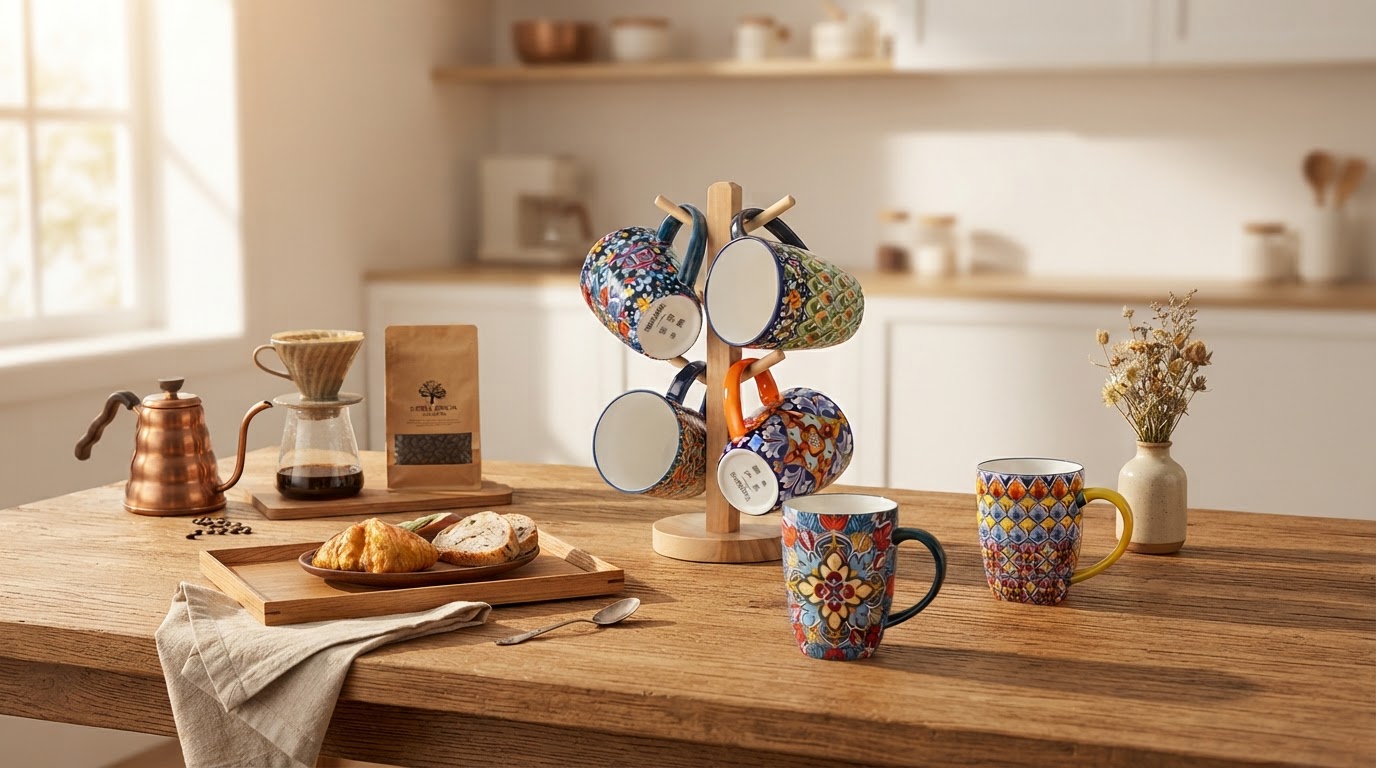
Selecting a Patterned Ceramic Coffee Mug Set for Daily Use
 Maya ChenContributing Editor
September 10, 2026. This assessment evaluates the technical requirements of high-volume ceramic drinkware. It is intended for consumers who prioritize thermal performance and material longevity over transient design trends.
The Technical Reality of Mass-Market Ceramics
The conventional wisdom says that a coffee mug is a simple commodity, defined primarily by its visual appeal. However, the performance delta between low-fire earthenware and high-fire porcelain is significant. Many consumers gravitate toward artisanal options found on platforms like Etsy, where a Ceramic Mug Set may offer intricate floral patterns but often lacks the standardized thermal shock resistance required for modern dishwashers. According to Etsy product data, these sets frequently emphasize aesthetic variety—such as 12 oz cups with varied motifs—without addressing the porosity of the clay body. Here’s the part nobody talks about: lower-density ceramics absorb more water during the wash cycle, which eventually leads to micro-cracking and structural failure when subjected to microwave heating. While mandala print coffee cups are often marketed as decorative objects, their utility is governed by the vitrification temperature of the kiln. If the ceramic hasn't reached full vitrification, it remains porous. This porosity isn't just a durability issue; it affects heat retention. A mug that leeches heat into its own walls faster than it holds it in the liquid is a failed piece of engineering. We see this frequently in hand painted style porcelain mugs that prioritize surface glaze over body density. Run the math: a standard 10 oz pour of coffee at 185°F loses nearly 15% of its temperature within three minutes when placed in a high-porosity vessel. To maintain a drinkable temperature of 150°F for more than ten minutes, the material must possess a specific heat capacity that only dense porcelain or bone china can reliably provide.
Performance Specs of the Pack Of 6 Bohemian Style Porcelain Coffee Mugs
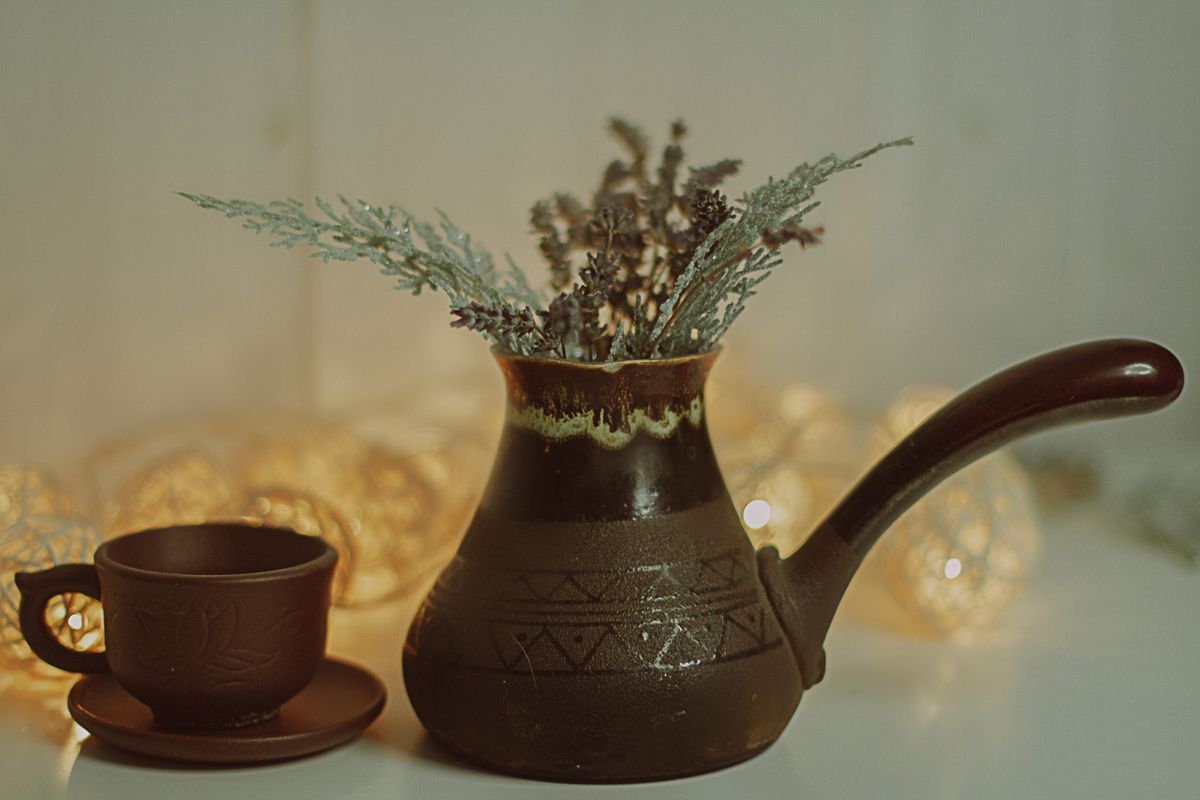
Photo by olga Volkovitskaia on Pexels
The Pack Of 6 Bohemian Style Porcelain Coffee Mugs departs from the standard "aesthetic-first" manufacturing model by utilizing a high-density porcelain substrate. Unlike the Moroccan style coffee mugs often found in boutique shops that use heavy stoneware, these porcelain units achieve a balance between weight and thermal inertia. Each mug in the set is engineered to withstand the repeated thermal expansion and contraction cycles of a residential microwave without glaze crazing. This is a critical distinction because crazing—the fine network of cracks in a glaze—creates a breeding ground for bacteria and compromises the structural integrity of the handle. The bohemian patterns are applied using an in-glaze or under-glaze technique, ensuring that the vibrant pigments are shielded by a clear, non-porous silica layer. This prevents the fading often seen in mandala print coffee cups that use over-glaze decals. Furthermore, the 11-ounce capacity is not an arbitrary choice; it is optimized for the standard output of most pod-based brewing systems while leaving exactly enough headspace for thermal expansion and milk displacement. While the industry often pushes hand painted style porcelain mugs as the pinnacle of kitchenware, the precision-molded consistency of this 6-pack ensures that heat dissipation is uniform across all six vessels. This uniformity is essential for hosts who require a predictable experience for guests. The handle geometry is also worth noting; the "C" shape is calculated to keep the center of gravity low, reducing the torque on the user's wrist when the vessel is at maximum capacity. This is a functional advantage over the thinner, more fragile handles found on specialty Moroccan style coffee mugs that often prioritize silhouette over ergonomics.
A Decision Framework for Durable Drinkware

Photo by Ceren Büşra SEVTEKİN on Pexels
When evaluating a patterned ceramic coffee mug set, the buyer must look past the surface decoration and analyze the manufacturing specifications. The market is saturated with options that fail within six months of daily use due to poor material selection. To ensure a set survives more than 500 dishwasher cycles, use the following checklist:
- Verify the material composition: Porcelain is superior to stoneware for chip resistance and non-porosity.
- Check for lead-free and cadmium-free certification to ensure chemical stability at high temperatures.
- Assess the glaze application: Under-glaze patterns are permanent, while over-glaze decals will eventually peel.
- Evaluate the handle-to-body join: A seamless transition indicates a higher-quality mold and lower risk of snapping.
- Measure the base diameter: A wider base provides a lower center of gravity and better stability on various surfaces.
- Confirm microwave and dishwasher safety: These are non-negotiable for any mug intended for daily household use.
Shop Pack Of 6 Bohemian Style Porcelain Coffee Mugs here.